












Crypto Security and Self-Custody Awareness Guide
Table of Contents
Why Safety & Security Matters in Crypto
Security matters more in crypto than in traditional finance because there is usually no bank to reverse a fraudulent payment and no password reset for a lost seed phrase. Most losses come from scams, phishing, poor key storage and simple transfer mistakes rather than broken blockchains. The foundations are: understand who holds your keys, keep your seed phrase offline, match your wallet type to the amount you hold, check every transfer carefully, and treat unsolicited offers and urgency as warning signs. The key points:
- On an exchange, the platform holds your keys; in self-custody, you do.
- Hot wallets suit small, active balances; cold wallets suit long-term holdings.
- Never share your seed phrase, and never type it into a website.
- Slow down: most costly mistakes happen when people rush.
Moneysmart’s overview of crypto assets explains the risks, and Scamwatch publishes current scam alerts.
Cryptocurrency flips the traditional financial system on its head. Instead of banks, brokers, or institutions safeguarding your money, you become the bank. You control the keys, the access, and ultimately the security of your assets.
This is both liberating and dangerous. On one hand, no government, corporation, or middleman can freeze your account, deny your withdrawal, or take custody of your funds without your consent. On the other hand, there is no safety net: if your wallet is compromised, if you fall for a scam, or if you simply mismanage your private keys, your assets are gone permanently. There’s no “forgot password” button, no customer support ticket, no reversal of poor security decisions like traditional society has become accustomed to. You are the first & last point of defence of your finances.
- In Traditional Finance: Banks protect deposits, insurers backstop losses, regulators enforce oversight. If your debit card gets stolen, your bank can usually refund fraudulent charges.
- In Crypto: You are your own bank. Your security decisions directly determine whether your wealth grows or vanishes. Responsibility shifts entirely from institutions to the individual.
This makes security and self-custody the most critical foundations of crypto participation. You can have the best investment strategy in the world, but it means nothing if you can’t keep your assets safe.
Why Security Matters More Than Ever
Innovation typically is accompanied by attention. Attention brings emotions. Emotions bring decisions. As cryptocurrency becomes rapidly adopted globally as the next generation of digital finance, so does the risk of financial crime & scams that follow. Billions of dollars are lost to crypto hacks, scams and poor security every year. These are just a few of the instances that have occurred over the years that have affected crypto investors:
- Billions lost to hacks and scams every year. Centralised exchanges have been breached, DeFi platforms exploited, and individuals tricked into giving up seed phrases.
- Rapid adoption = bigger targets. As more money flows into crypto, bad actors innovate constantly to exploit newcomers and veteran traders alike through email offers, false SMS claims, & even lookalike domains.
- Permanent losses. Unlike a misplaced bank password, crypto mistakes are irreversible. Sending crypto to the wrong blockchain, exposing your private keys, or losing access to a wallet can mean losing everything forever. It is a mistake many investors have made, at great cost.
If you treat crypto security as optional, you won’t last long in this space. Successful crypto investors & traders alike build habits around implementing 2FA protocols, double-checking transaction details, & layered supporting defences.
The best practices for using your wallet safely turn these principles into daily habits.
Understanding Self-Custody: Owning Your Keys, Owning Your Crypto
At the core of cryptocurrency lies one simple truth:
Control over your private keys = control over your money.
What Are Private Keys?
A private key is a long cryptographic number that acts as the master password to your crypto. Your holdings sit behind it, and only you, the owner, should ever know it. Whoever holds the private key can move assets from one address to another, connect to applications, and sign transactions.
When you create a new non-custodial wallet, whether a software wallet app or a hardware wallet, it generates your private keys for you. A typical private key is 64 hexadecimal characters long, but you rarely see it. Instead, the wallet shows you a seed phrase of 12 to 24 words, a human-readable backup of the master secret from which all of your wallet’s private keys are derived. Write the words down in the exact order shown; they are generated automatically and cannot be chosen yourself, and they are how you restore the wallet if your device is lost. The BIP39 standard defines how these words work.
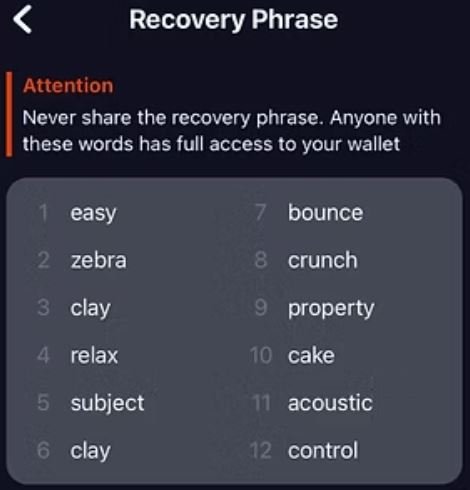
If someone else gains access to your private key or seed phrase, they gain control of your funds. Understanding private keys and the seed phrase properly, and following advanced seed phrase storage techniques, is the starting point for everything else.
Custodial vs. Self-Custodial
🏦 Custodial = Convenience but trust someone else.
🔒 Self-custody = Freedom & security but greater personal responsibility.
This is the trade-off every crypto investor must navigate.
Custodial (Not Self-Custody): When you keep your crypto on a centralised exchange (Binance, Coinbase, Kraken), you’re not holding the keys. The exchange is. Your balance is essentially an IOU from them.
✅ Benefits: Easy to access, user-friendly, dedicated support team & recovery options.
❌ Risks: Exchange hacks, insolvency (FTX collapse), frozen withdrawals, government seizures.
Self-Custodial (True Ownership): When you use a non-custodial wallet (hardware wallet, MetaMask, Trust Wallet), you control the private keys.
✅ Benefits: Total sovereignty over your funds. Zero reliance on anyone but yourself.
❌ Risks: 100% of security responsibility is on you. If you lose your keys, nobody can help you.
As a general rule of thumb rather than a recommendation for your situation, many investors move to self-custody once their holdings reach an amount they could not afford to lose, often somewhere around A$10,000. Smaller amounts can still be self-custodied, especially for long-term investing.
Working out which wallet is right for you is one of the most important decisions in your crypto journey, and understanding custodial and non-custodial wallets and the risks of keeping crypto on an exchange explains why.
Hot Wallets
What is a Hot Wallet?
Pros and Cons of a Hot Wallet
Hot wallets are the most popular form of wallet, especially for newer investors. A hot wallet is any wallet whose keys are on an internet-connected device. That includes exchange accounts, which are custodial because the exchange holds the keys, and wallet apps such as MetaMask or Trust Wallet, which are non-custodial because you hold them. Constant connectivity makes hot wallets fast and convenient for trading, DeFi and payments on your phone, computer or browser, but it also exposes them to cyberattacks and human error if they are not properly protected. Learn more about the hot wallet and the software wallet.
Here are the Pros & Cons of choosing a hot wallet:
Pro’s of a Hot Wallet
Con’s of a Hot Wallet
Instant access → Perfect for quick trading or payments.
High hack risk → Online exposure makes them prime targets.
User-friendly → Most have clean interfaces and easy onboarding.
Device dependency → If your phone/laptop is compromised, so is your wallet.
Integration → Required for using DeFi platforms, NFTs, staking protocols.
Centralisation risk (for exchange wallets) → You don’t own the keys, or the Crypto.
Free to start → Most hot wallets are free to download and use.
Short-term only → Not suitable for large or long-term storage.
Benefits & Use Cases of a Hot Wallet
Hot wallets possess a number of benefits & use cases that are tailored towards the everyday investor, making the overall cryptocurrency experience much smoother than other wallet variants. These are some of the environments where a hot wallet is best suited for an investor:
⚡ Convenience: Simplistic Crypto investing process.
💧 Liquidity: Quickly buying, selling, or swapping coins.
🌐 DeFi Access: Yield farming, lending, NFT marketplaces, token launches.
🔄 Active Trading: Perfect for frequent traders who need speed.
📱 Mobile Access: Manage assets anytime, anywhere from your phone or laptop.
Risks & Vulnerabilities of a Hot Wallet
With any benefit comes a risk aspect, and Hot wallets are no different. Whilst some may seem less obvious than others, all risk profiles have their own unique rankings to the individual investor.
🎭 Phishing attacks: Fake websites and apps trick users into entering their seed phrase.
🦠 Malware/Spyware: Malicious software that reads your clipboard, replacing wallet addresses.
💥 Exchange hacks: Centralised platforms holding millions of hot wallets are prime hacker targets.
🙈 Human error: Sending funds to the wrong chain or address.
⏳ Custody Risks: Keeping large balances in hot wallets increases exposure over time.
🔑 No Keys, No Crypto (exchange accounts): On an exchange you don’t hold the keys or seed phrase; the exchange does. If something was to happen to the exchange, you’ll be the first affected.
Is a Hot Wallet Right for You?
Whilst hot wallets are among the easiest to manage, they might not be the ideal option for everyone. Here are the For & Against of selecting a hot wallet:
👤 Who Should Use a Hot Wallet?
🚫 Who Shouldn’t Use a Hot Wallet?
💹 Active Traders: Constant access to funds for quick moves.
📦 Long-Term Storage: Better kept in cold wallets.
🧪 Experimenters/ Learners: Safe for small amounts while testing the crypto ecosystem.
💰 Life Savings: Too risky to store large amounts.
💳 Daily Spenders: Using crypto for payments, tipping, and transfers.
🖥️ Low-Security Users: If you can’t maintain strong device & online protection.
Best Practices for Hot Wallet Safety
And finally, our best practise tips for those of you that decide that a hot wallet is right for you:
1️⃣ Only keep small balances (think “wallet cash,” not savings).
2️⃣ Always enable two-factor authentication on exchange wallets.
3️⃣ Double-check URLs and apps before logging in.
4️⃣ Never store seed phrases digitally (screenshots, cloud storage, notes apps). Write them down on paper.
5️⃣ Use hot wallets as transactional tools, not as financial vaults.
Warm Wallet
A warm wallet sits between a hot wallet (always online) and a cold wallet (completely offline). It provides a balanced solution between investors who are looking for a more secure setup than a hot wallet, but still easier to access than cold storage. Unlike an exchange account, you personally control your own private keys that give you exclusive access over your crypto holdings. In line with such, warm wallets are the favourite for those who want broad access to the market that an exchange provides, yet desire the sole-custody ownership of their assets that owning your own keys provides.
With this in mind, a greater level of self-reliance emerges where investors must be able to confidently navigate the DeFi space of cryptocurrency in a safe & secure manner. Failure to do so could lead to serious risks & financial exposure.
Pros and Cons of a Warm Wallet
Here are the Pros & Cons of choosing a warm wallet:
Pro’s of a Warm Wallet
Con’s of a Warm Wallet
Stronger security → Less exposure to constant online risks than hot wallets.
Still Compromisable → Not fully offline, so advanced attacks remain possible.
Moderate convenience → Faster access than cold wallets when funds need to move.
More complex to use over hot wallets.
Scalable protection → Requires 2FA &/or Multi-sig authorisation for transactions.
Slower transactions than hot wallets due to extra security layers.
Better suited for medium-term holding (weeks to months).
Zero Security support → Self reliant on security & safety of assets.
Benefits & Use Cases of a Warm Wallet
Warm wallets shine in situations where speed & accessibility are equally as desired as self-custody & security. For investors who seek the ability to hold securely for the long-term, or actively trade the markets at will, these are the highlight benefits that a warm wallet provide:
⚡ Convenience: Easier access than cold wallets for regular transactions.
🛡️ Enhanced Security: More protected than hot wallets, often using hardware or multi-sig features.
🔄 Flexible Use: Can interact with exchanges or DeFi while keeping larger balances relatively safe.
🗝️ Key Ownership: You retain control of your private keys, unlike an exchange account.
💳 Regular Payments: Manage recurring crypto transactions or medium-term holdings with better security than a hot wallet.
🤝 Integration: Can connect safely to multiple platforms, apps, or dApps with reduced risk.
Risks & Vulnerabilities of a Warm Wallet
Whilst warm wallets provide greater security measures than hot wallets, they can also hold more risk if the individual investor lacks the knowledge to correctly use the wallet.
🎭 Targeted cyberattacks: Hackers often go after warm custody services and institutional platforms.
🚪 Insider risks: Because warm wallets are often multi-user, bad actors within a company can exploit access.
🧬 Not Disconnecting: Forgetting to disconnect your warm wallet from 3rd party websites (DeFi Applications) can keep your funds open to be exploited.
🤓 Overconfidence: Some users treat warm wallets as “just as safe as cold,” which they are not.
🙈 Human error: Sending funds to the wrong chain or address increases risk.
Is a Warm Wallet Right for You?
Whilst a warm wallet seems from the outside to offer the best of both worlds, there are a few trade-offs that should be considered. Here are the For & Against of selecting a warm wallet:
👤 Who Should Use a Warm Wallet?
🚫 Who Shouldn’t Use a Warm Wallet?
Active Traders & mid-term investors → Those who move funds every few days/weeks.
Complete beginners → Increased complexity can lead to overlooked mistakes.
Institutions & funds → Warm custody offers controlled access and audit trails.
Investors looking to store large, long-term holdings.
Security-conscious individuals → Users who want extra protection without the hassle of plugging in a hardware wallet daily.
Investors who share devices with multiple users.
Best Practices for Warm Wallet Safety
Here are our best practise tips for those of you that decide that a warm wallet is right for you:
1️⃣ Use Two Factor Authentication &/or multi-signature setups if available.
2️⃣ Add withdrawal delays/alerts to catch suspicious activity.
3️⃣ Keep only medium amounts in your warm wallet (not huge life savings).
4️⃣ Ensure offline backups (Paper copy) of private keys/seed phrases in case the warm wallet software fails.
5️⃣ Treat warm wallets as bridges between hot and cold storage, not a permanent home.
Cold Wallet
Cold wallets (also known as a hardware storage device) are the gold standard for securing large sums of crypto, both for long-term holders (HODLers) and institutions managing internal funds. Designed as a dedicated signing device that keeps keys completely offline, cold wallets are widely considered the safest way to store crypto, greatly reducing exposure when it comes to hacks, phishing attacks, malware, and other online threats. As the preferred choice for long-term wealth holding, cold wallets generate their own unique private keys & recovery phrase inside the physical device, never touching an internet connection.
Pros and Cons of a Cold Wallet
Here are the Pros & Cons of choosing a cold wallet:
Pro’s of a Cold Wallet
Con’s of a Cold Wallet
Highest security level → Keys are kept away from online attacks.
Less convenient → Sending funds requires connecting the device or transferring offline-signed transactions.
Ideal for long-term storage → Perfect for funds that don’t require frequent movement.
Physical risks → Loss, theft, fire, or damage can destroy the wallet.
Ownership Sovereignty → You alone control the keys; no platform can freeze your withdrawals.
Much Slower to Access → Completing any form of transfer takes on average 5 minutes to complete.
Initial Cost → Hardware wallets cost money (typically about A$80 to A$400 per device).
Benefits & Use Cases of a Cold Wallet
Cold wallets are setting the standard for long-term digital wealth storage. Closely comparable to a traditional banking system, cold wallets act as a vault for your funds that remain locked away from the cyber world. Only in this case, that bank is located right in the palm of your hand. For most people, the idea that you could access any amount of your funds without having to go through the hassle of explaining yourself to the teller is enough of a reason to choose a cold wallet. Here are just a few of the core benefits that a cold wallet provide:
🛡️ Long-term investors storing life savings in BTC, ETH, or other major assets.
🏨 Institutional holdings requiring maximum security (custody firms often split keys across locations).
🕴 High-net-worth individuals protecting crypto from theft or hacks.
🔒 Offline backup for hot or warm wallets: Moving funds in and out of cold storage for extra protection.
💳 Sole custody of assets at a very high level of security
🤝 Wealth Succession Planning: Properly stored seed phrase, private keys, & hardware wallet creates a clear inheritance plan for family without relying on centralised exchanges.
Risks & Vulnerabilities of a Cold Wallet
Whilst from a security or usability perspective cold wallets could be deemed seamless, there are a few tangible risks & vulnerabilities that could arise if not responsibly used:
📝 Seed phrase loss/misplacement: Without it, your funds are lost forever.
🔥 Physical theft or destruction: Hardware wallets or paper backups can be stolen or damaged.
🧩 Improper setup: Using an unverified device or compromised firmware can introduce vulnerabilities.
🙈 Human error: Mismanaging multiple wallets, copying keys incorrectly, or sending funds to the wrong chain or address increases risk.
💻 Excessive 3rd party DeFi connections: Ignoring the nature of a cold wallet by treating it as if it was a warm wallet.
Is a Cold Wallet Right for You?
Whilst a cold wallet for most investors is typically the right move, there are some caveats that may persuade alternative wallet choices. Here are the For & Against of selecting a cold wallet:
👤 Who Should Use a Cold Wallet?
🚫 Who Shouldn’t Use a Cold Wallet?
Long-term holders / HODLers.
Active day traders needing instant access.
Crypto investors with significant wealth (for example, A$25,000 or more).
Newer investors seeking a simplistic approach to crypto.
Institutions managing internal funds.
Very small, short-term holdings (for example, under A$10,000).
Investors seeking self-custodial & high level security systems.
Investors who aren’t able to safely store their hardware wallet.
Best Practices for Cold Wallet Safety
Here are our best practise tips for those of you that decide that a cold wallet is right for you:
1️⃣ Always backup your seed phrase offline, preferably in multiple secure locations. Write it down on paper and store it somewhere safe.
2️⃣ Keep your hardware wallet in a safe location at all times.
3️⃣ Test your recovery process before storing significant funds.
4️⃣ Keep firmware updated safely and always download from official sources.
5️⃣ Keep DeFi activity separate from your long-term cold storage. If you do connect a hardware wallet to DeFi applications, read every request on the device screen.
6️⃣ Consider multi-signature setups for added redundancy (Optional Added Protection)
Now that we’ve covered all three cryptocurrency wallets in detail, it’s time to cover one last factor that may help determine which type of Cryptocurrency wallet you decide to go with.
Safe Transfers, Deposits, and Withdrawals
When most people think about security in crypto, they imagine hackers breaking into wallets or exchanges. But in practice, one of the riskiest parts of the entire process is something much more ordinary: moving your funds. Transfers, deposits, and withdrawals are the moments where the majority of costly mistakes occur. The blockchain does not forgive human error, so understanding how to execute these steps with precision is essential.
Choosing the Right Blockchain
The first layer of risk comes from sending assets across the wrong blockchain. Many cryptocurrencies exist in multiple formats: USDT alone can be issued on Ethereum (ERC-20), Tron (TRC-20), BNB Smart Chain (BEP-20), and others. If you attempt to withdraw to a wallet that doesn’t support the network you selected, those funds may be permanently lost. Before every transfer, confirm that both the sending and receiving platforms support the same network. If you are unsure, do not send. Check the official documentation of your wallet or exchange, and only proceed once you know both sides support the same network.
Verifying Wallet Addresses
Unlike a bank account number, a blockchain address cannot be looked up or corrected after the fact. Copy-and-paste errors, shortened addresses, and malware that swaps a copied address for the attacker’s are all real threats, as is address poisoning, which plants lookalike addresses in your transaction history.
The solution is simple but requires discipline: copy the address from the receiving wallet itself, check at least the first and last six characters after pasting, confirm it on a hardware wallet’s screen if you use one, and send a small test transaction before any large transfer.
Double-Checking Transaction Details
It’s not just addresses that matter. Transaction fees, token amounts, and even memo tags can determine whether your funds arrive safely. Some cryptocurrencies such as XRP, XLM, or ATOM require a destination tag or memo in addition to the address. Forgetting this step can result in your funds being stuck or delayed indefinitely. Exchanges typically display reminders for these assets, but never rely solely on prompts. Make it a habit to review every field carefully before clicking confirm.
Transaction Hashes and Confirmations
Every transaction on the blockchain generates a unique transaction hash (TXID), which serves as its permanent receipt. Once you initiate a transfer, save the TXID and use it to track progress on a block explorer. This step confirms that your transaction is not only sent, but also verified by the network. Block explorers show the number of confirmations, which provides assurance that the transfer has been permanently settled and cannot be reversed by a chain reorganization. If you ever need to troubleshoot with an exchange, the TXID is the first piece of information support will request.
Timing and Network Congestion
During periods of high network congestion, transaction fees can spike, and confirmation times may slow dramatically. If you attempt to move funds without adjusting for this, your transaction could be delayed for hours or even days. As an optional step, check current network fees using tools like Etherscan’s gas tracker or similar dashboards before sending, and consider adjusting your fee level if you need faster settlement.
Deposits and Withdrawals on Exchanges
When depositing funds into an exchange, always verify that the exchange supports the token and network you are using. Sending unsupported tokens to an exchange wallet is one of the fastest ways to lose funds permanently. Likewise, when withdrawing from an exchange to self-custody, check whether the withdrawal network aligns with your receiving wallet. Many traders default to cheaper chains (like TRC-20 for USDT), but saving a few dollars in fees is meaningless if it introduces compatibility issues later.
Final Layer of Safety
The golden rule with all transfers, deposits, and withdrawals is this: slow down. Most losses occur because people are in a rush; rushing to buy a dip, rushing to move funds before a trade, or rushing under pressure from FOMO. Instead, take a breath and verify everything two or three times before hitting confirm. Precision is the only safety net in crypto.
Avoiding Scams & Trading Risks
The fastest way to lose your cryptocurrency is not through a bad trade, but through deception. Hackers and scammers don’t usually break blockchains themselves; instead, they exploit human error. In a system where transactions are irreversible, once your funds leave your wallet, there is no customer service line to call, no bank dispute to file, and no “undo” button. This makes scam awareness and risk management just as important as investment strategy.
Here’s how to spot and avoid the biggest threats & trading risks:
🚫 Common Scams in Crypto
The steps to avoid crypto scams go further on each of these, and learning to spot a phishing website stops the most common attack. Pump and dump schemes and the checklist for spotting a rug pull cover the token-launch scams below.
Phishing Attacks
These scams mimic the websites of exchanges, wallets, or decentralised applications, tricking people into entering sensitive information such as private keys or seed phrases. Often, they arrive via emails, fake Google ads, or direct messages on platforms like Telegram and Twitter. Once you type in your details, the scammer has complete access to your wallet.
The defence is simple but non-negotiable: never click unknown links, always use bookmarked URLs, and remember that no legitimate crypto platform will ever ask you for your seed phrase.
Pump-and-dump schemes
This is where a group of insiders hypes up a new or obscure token, often spreading promises of “guaranteed moonshots” in online communities. By the time unsuspecting buyers rush in, the insiders are already selling at inflated prices, leaving newcomers holding worthless bags.
The solution here lies in discipline and skepticism. Before buying into any asset, check its trading volume, liquidity, and whether the project has real fundamentals. If the only selling point is “we’re going to the moon,” it’s already too late. Keep in mind that this has essentially described the entire Memecoin market.
Fake Wallet Apps or Extensions
Fake wallet apps and browser extensions present yet another risk. Criminals often publish counterfeit versions of well-known wallets in app stores or as downloadable software. Once installed, these apps silently drain your funds or capture your seed phrase.
Protecting yourself comes down to diligence: only download wallets from official websites, and double-check that the app developer matches the legitimate team.
Romance & Trust-Based Scams
Scams are not always technical; many are psychological. Romance and trust scams build a relationship over weeks or months through dating apps, social media or a “wrong number” message, then introduce a crypto investment opportunity, often on a fake platform that shows invented profits. Victims are asked to deposit more and more, and to pay “fees” to withdraw, before the scammer disappears.
The rule is to separate your personal life from your financial one. If someone you have only met online pressures you to invest, it is almost certainly a scam. Share advice on protecting older Australians from scams with family, and be wary of anyone offering to recover stolen crypto afterwards.
Rug Pulls & Exploits
These occur when developers launch a token or decentralised finance project, attract liquidity, and then vanish overnight with investor funds. In some cases, the exploit comes from within the project code itself, malicious backdoors written into smart contracts that allow developers to drain liquidity pools at will.
To avoid these traps, research is critical. Look into whether the development team is anonymous or publicly recognised, whether smart contracts have undergone security audits, and whether the project has long-term credibility beyond social media hype. Never invest in projects you have no knowledge about.
⚠️ Trading Risks to Manage
A structured approach to managing crypto trading risks covers position sizing, leverage and concentration in more depth.
Incorrect Blockchain / Address
Even outside of scams, trading itself carries risks that beginners often underestimate. A simple mistake such as sending funds on the wrong blockchain can result in permanent loss. Likewise, mistyping a wallet address or copying the wrong string is enough to lose funds forever. The best practice is to always copy and paste addresses, never type them manually, and send a small test transaction before moving large sums.
Lack of 2FA on Exchanges & Wallets
Many people still fail to secure their exchange accounts with Two-Factor Authentication (2FA), leaving themselves vulnerable to hackers who only need a password leak to get in. Even worse, some rely on SMS-based 2FA, which can be bypassed with SIM swap attacks. Adopting the simple practise of using an authenticator app such as Google Authenticator can strengthen protection greatly.
Trading on Unsecured Wi-Fi
Trading on unsecured public Wi-Fi networks opens the door to man-in-the-middle attacks, where attackers intercept your data in transit. The rule of thumb is to only trade on trusted networks and, when possible, use a VPN for an added layer of protection.
Overexposure & Leverage
One of the greatest trading risks of all isn’t scams or hacks… it’s your own trading psychology.
Over-leveraging, going all-in on a single trade, or risking more than you can afford to lose is a guaranteed way to get liquidated. Many traders who survive the technical threats still destroy their portfolios through greed and lack of discipline. Risk management is a security practice in itself. A strong rule, such as limiting the amount you could lose on any single trade to a small share of your portfolio (many experienced traders use 1 to 2 percent), is as essential as any hardware wallet.
🛡️ Golden Rules to Stay Safe
The golden principles of safety in crypto boil down to discipline and paranoia.
✅ Treat your seed phrase like the keys to your vault; never store them digitally, never share them, and never trust anyone who asks for them.
✅ Double-check every transaction detail; address, blockchain, and amount before confirming. If a situation feels rushed, don’t act. Scammers thrive on urgency and FOMO.
And above all, remember that every stranger in this space could be trying to take your crypto. Keeping that mindset may sound harsh, but it’s the one thing that could save you from catastrophic loss.
To put this into practice, keep long-term holdings in cold storage on a cold wallet, start by choosing the right hardware wallet, and follow the steps to back up a crypto wallet. Protect your accounts with two-factor authentication and a withdrawal whitelist, learn the habits for sending and receiving crypto safely, avoid fake wallet apps, and use tools to revoke approvals you no longer need. Larger holdings may justify a multi-signature wallet, and estate planning makes sure your holdings are never lost with you. If something goes wrong, know how to check whether a wallet is compromised and report a crypto scam.

Frequently Asked Questions
What is self-custody in crypto?
Self-custody means you personally hold the private keys to your cryptocurrency, rather than leaving them with an exchange or other third party. Only you control access to your funds, which removes the risk of a platform failing or freezing withdrawals, but places full responsibility for security and backups on you.
Why is self-custody considered safer than keeping crypto on an exchange?
Exchanges can be hacked, go bankrupt, or freeze withdrawals, as seen with events like FTX. When you self-custody with a hardware wallet, your funds remain accessible regardless of what happens to any exchange. You're not dependent on a third party's solvency or security practices.
What are the biggest risks of self-custody?
The biggest risks include losing your seed phrase (which means permanent loss of funds), storing your seed phrase insecurely (theft or damage), falling for phishing attacks that trick you into revealing private keys, and using malware-infected devices during wallet setup or transactions.
What is a seed phrase and why does it matter?
A seed phrase is a 12 or 24-word recovery phrase generated when you set up a crypto wallet. It is the master key to all funds in that wallet. Anyone with your seed phrase has full access to your crypto. It must be written on paper and stored in a secure, offline location, never digitally.
What is the best type of wallet for self-custody?
A hardware wallet is generally considered the strongest option for self-custody. Devices such as Ledger, Coldcard and BitBox keep private keys offline, protecting them from most online attacks, although you still need to check every transaction on the device and never share your seed phrase. For large holdings, a hardware wallet combined with a metal seed phrase backup, or a multisig setup, adds further protection.
How should I store my seed phrase safely?
Write your seed phrase on paper or stamp it into a metal plate, and store it in a physically secure location such as a safe. Never store it digitally, in email, cloud storage, or photos. Consider keeping a second copy in a separate secure location in case of fire or flood. Never share it with anyone.
Can I recover my crypto if I lose my hardware wallet?
Yes, as long as you still have your seed phrase. Restore it on a new hardware wallet to regain full access; avoid typing it into a phone or computer wallet, which exposes it to an internet-connected device. The hardware wallet is just a signing device; your seed phrase is what actually controls your crypto. If you think someone may have found the device and the phrase, move the funds to a new wallet straight away.
What common mistakes do beginners make with self-custody?
Common beginner mistakes include taking a photo of the seed phrase, storing it in a notes app, never testing wallet recovery before depositing large amounts, buying hardware wallets from unofficial resellers, and entering seed phrases on fake wallet websites. Always buy direct from the manufacturer and verify device authenticity before use.
WRITTEN & REVIEWED BY Chris Shepley
UPDATED: JULY 2026