Frequently Asked Questions
What is a private key in cryptocurrency?
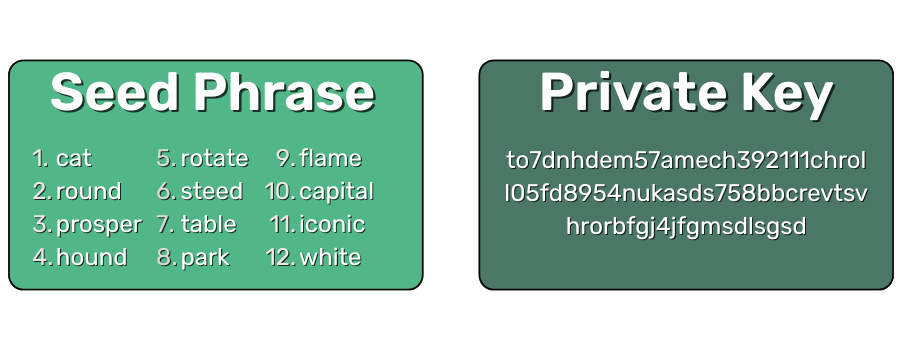
A private key is a cryptographic string of numbers and letters that proves ownership of a cryptocurrency wallet and authorises transactions. It must be kept completely secret. Anyone with your private key has full control of your funds.
How is a private key different from a public key?
A public key is your wallet address that you can share openly to receive funds, similar to a bank account number. A private key is the secret counterpart used to sign and authorise transactions. You share one freely; the other must never be revealed.
What happens if I lose my private key?
Without your private key or seed phrase, you permanently lose access to your wallet and all funds inside it. There is no password reset, customer support, or recovery mechanism. This is why secure backups are critical.
What happens if someone steals my private key?
They can immediately transfer all funds from your wallet to their own address. Blockchain transactions are irreversible, so the theft is permanent. This makes protecting your private key one of the most important aspects of crypto security.
How should I store my private key?
Store private keys in cold storage using a hardware wallet, or record them on paper kept in secure physical locations. Never store private keys digitally in plain text, cloud storage, email, or screenshots where they could be remotely compromised.
Can I change my private key?
No. A private key is mathematically linked to a specific wallet address and cannot be changed. If you want a new private key, you must create a new wallet and transfer your funds to the new address.
How does a hardware wallet protect my private key?
A hardware wallet stores your private key inside a secure offline chip that never connects to the internet. When you sign a transaction, the signing happens inside the device and the private key is never exposed to your computer or any network.
Is a private key the same as a seed phrase?
They are related but not identical. A seed phrase is a human-readable backup that can regenerate all private keys associated with a hierarchical deterministic wallet. A private key controls a single wallet address. The seed phrase is the master backup that produces multiple private keys.