Coinbase Exchange Review: The Complete 2026 Guide
Coinbase is a US crypto exchange founded in 2012 and listed on Nasdaq, which serves Australians through Coinbase Australia Pty Ltd, registered with AUSTRAC. It offers a simple buy screen (convenient but expensive), Coinbase Advanced with much lower maker and taker fees, free AUD deposits by PayID, staking, and its own Base network and self-custody wallet. Its public listing brings audited financial reporting, but a 2025 insider data breach shows that no platform is immune to problems. The key points:
- Use Coinbase Advanced rather than the simple buy screen to cut costs.
- Public-company reporting adds transparency, not a guarantee for your funds.
- Staking rewards are taxable income, and selling or swapping is a CGT event.
- AUSTRAC registration covers anti-money laundering rules, not the safety of your funds.
Moneysmart’s guide to crypto assets explains the risks of investing in crypto through a platform.
Coinbase is one of the best-known crypto exchanges in the world. Since its direct listing on Nasdaq in April 2021, it has reported audited financial results like any other listed company. For Australians, it offers a polished interface, global liquidity and the transparency of a publicly traded company.
Its main appeal is that reporting discipline, which sets it apart from privately held exchanges based in lightly regulated jurisdictions. Users should understand its two-tier pricing: the simple interface is convenient but carries higher fees, while Coinbase Advanced offers an order book and much lower costs.
Coinbase Australia Pty Ltd is registered with AUSTRAC, which means it must meet Australian anti-money laundering and identity verification obligations. From 8 April 2027, platforms that hold customer crypto will need an Australian financial services licence, as ASIC’s guidance on digital assets explains.
Company Background
Coinbase was founded to make buying crypto easy and has grown into one of the largest crypto companies in the world, later expanding its local services to Australia.
- Founded: 2012
- Headquarters: Remote-first (originally San Francisco, USA)
- Regulatory status: Nasdaq listed (COIN); AUSTRAC registered in Australia; licensed or registered in a number of other jurisdictions.
- Milestones: The first major crypto exchange to list on a US stock exchange (2021); launched Base, an Ethereum layer 2 network; replaced Coinbase Pro with Coinbase Advanced.
Where Is Coinbase Based?
Coinbase was founded in the United States in 2012 and is listed on the NASDAQ under the ticker COIN. The company describes itself as remote-first, so it has no single headquarters. Australians are served through Coinbase Australia Pty Ltd, a locally incorporated company. Coinbase is a centralised exchange, meaning it holds customer assets on their behalf.
Safety and Security
As a public company, Coinbase’s security practices and financial position are subject to ongoing disclosure.
- Custody: Coinbase says the large majority of customer crypto is held offline in geographically distributed cold storage.
- Insurance: Coinbase has disclosed crime insurance covering a portion of assets held in its hot wallets (reported at about US$255 million). It does not cover losses from your own account being compromised, and it is not deposit insurance.
- Two-factor authentication: Supports authenticator apps and hardware security keys such as YubiKey; avoid SMS codes, which are vulnerable to SIM swapping.
- Reporting: Quarterly public financial reports and audited annual accounts.
The 2025 data breach: In May 2025, Coinbase disclosed that criminals had bribed overseas customer support contractors to steal personal data of fewer than 1% of its monthly transacting users, which was then used to impersonate Coinbase and trick customers into sending funds. Coinbase refused a US$20 million ransom demand, said it would reimburse customers who were tricked into sending funds, and estimated the total cost at US$180 million to US$400 million. Passwords, private keys and 2FA codes were not taken, but the incident shows why you should never move funds at the request of someone claiming to be from an exchange.
Many experienced investors still prefer to hold their own keys, and choosing which wallet is right for you is the first step in moving assets off an exchange.
Is Coinbase Legal in Australia?
Yes. Coinbase Australia Pty Ltd is registered with AUSTRAC as a digital currency exchange provider, which is a legal requirement for exchanges serving Australians. That registration brings anti-money laundering and identity-verification obligations. Australian crypto rules are still changing, so it is sensible to check Australian crypto regulation for the latest position.
Is Coinbase Safe in Australia?
Coinbase states that it stores the large majority of customer assets in offline cold storage and supports two-factor authentication, including hardware security keys. As a listed company it also publishes regular financial reports. Those features add transparency but do not remove risk: exchange accounts can still be targeted by scammers, and platform problems can happen. It helps to know how to protect yourself against exchange hacks.
No exchange is risk-free. Registration with AUSTRAC relates to anti-money laundering rules and is not a guarantee that customer funds are protected, and crypto held on an exchange is held in that company’s custody. This is general information only and is not financial advice.
Supported Assets
Coinbase lists a large range of assets and screens each one before listing.
- Major coins: BTC, ETH, SOL, XRP, ADA and DOT.
- Altcoins: Hundreds of tokens, including major DeFi and AI projects. The range available to Australians can differ from the US.
- Stablecoins: USDC (which Coinbase helped launch with Circle) and USDT.
- Base ecosystem: Access to assets built on the Base network.
Coinbase is often slower to list new meme coins than some competitors, because each asset goes through a legal and security review.
Fees and Costs
Coinbase’s fees vary a lot between the standard app and Coinbase Advanced.
- Simple trade: Priced with a spread plus a fee, typically totalling well over 1%. This is the most expensive way to buy.
- Coinbase Advanced: A volume-based maker-taker model, with entry-level fees that have been around 0.40% maker and 0.60% taker, falling as 30-day volume rises. Check the current schedule for Australia.
- AUD deposits and withdrawals: Generally free via PayID or bank transfer.
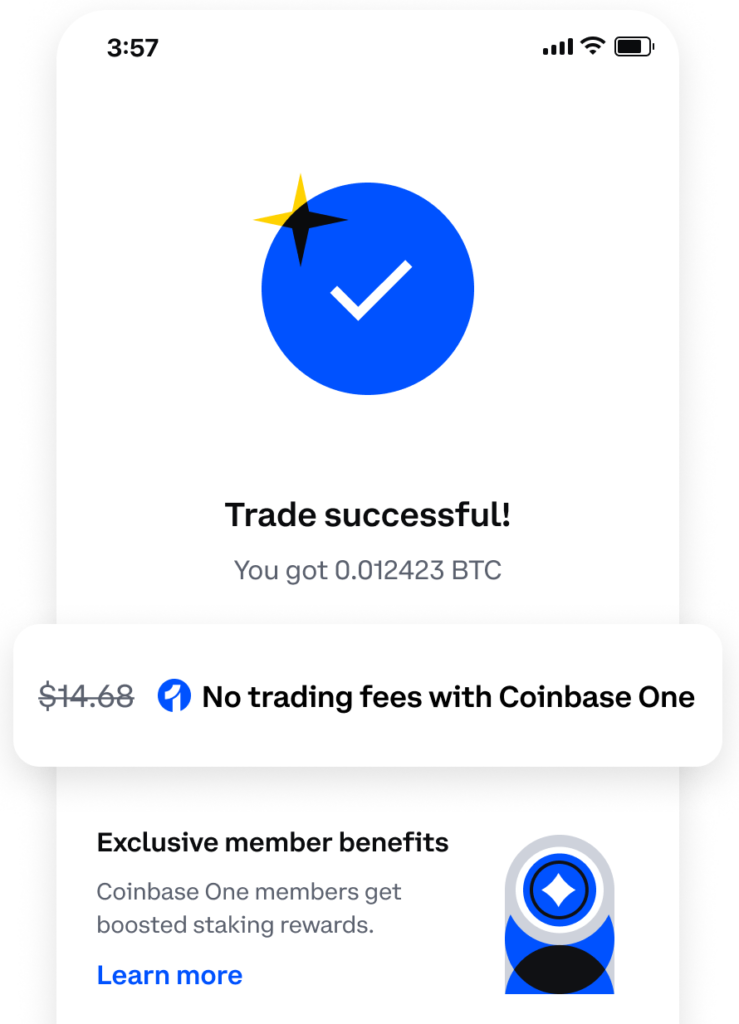
- Coinbase One: A paid subscription offering reduced trading fees (up to a limit) and other benefits; check whether the price makes sense for how much you trade.
AUD Deposit and Withdrawal Methods
Coinbase has fully localized its banking stack for Australians, offering instant “on-ramps” that rival local competitors.
- Deposit methods: PayID (Instant), Osko, Bank Transfer, Debit Card (High fee).
- Withdrawal methods: Bank Transfer, PayID.
- Deposit times: Instant for PayID; standard bank transfers take 1 to 2 business days.
- Verification: Your first PayID deposit serves as an additional layer of bank account verification.
Trading Experience
Coinbase offers a seamless transition from a “first-time buyer” to an “active trader” within the same account.
- Beginner Interface: Extremely clean. It feels like using a premium banking app. Best for recurring buys and long-term holding.
- Coinbase Advanced: Built for performance. Includes TradingView charts, real-time order books, and limit/stop-loss orders.
- Mobile App: Features a unified dashboard for trading, staking, and exploring the “Base” ecosystem.
- Liquidity: Deep global order books mean large orders on major assets usually have little price impact.
Additional Features
- Staking: Staking rewards on assets like ETH, SOL and ADA, with Coinbase taking a commission. Rewards are generally ordinary income when received, as the ATO’s guidance on staking rewards explains.
- Coinbase Learning: Small crypto rewards for completing educational content, where available.
- Coinbase Wallet: A separate self-custody wallet that gives you control of your private keys.
- Recurring buys: Set up a dollar-cost averaging plan to buy a set amount every week or month. Each later sale or swap is generally a CGT event, as the ATO’s guidance on CGT on crypto explains.
Customer Support
Coinbase has significantly improved its support reputation in recent years, moving away from automated bots to more human interaction.
- Channels: 24/7 Live Chat, Email support, and an extensive Help Centre.
- Coinbase One Perk: Subscribers get priority 24/7 phone support.
- Reputation: Known for being professional, though response times can lag during periods of extreme market volatility.
Verification & KYC
Onboarding for Australians is fast and strictly follows AUSTRAC regulations.
- Process: Fully mobile-optimised.
- Documents Needed: Australian Driver’s Licence or Passport.
- Time: Many users are verified within minutes.
- Friction Points: If your bank details do not match your ID exactly, there may be manual review delays.
Pros & Cons
Pros
✅ Publicly listed (Nasdaq: COIN), with audited financial reporting.
✅ Strong security features, including hardware security key support.
✅ Free, fast AUD deposits via PayID.
✅ Deep liquidity on major assets.
✅ Integration with the Base network and Coinbase Wallet.
Cons
❌ Simple trade fees are among the highest in the market.
❌ The 2025 insider data breach exposed some customers’ personal data.
❌ Fewer altcoins than broad exchanges like CoinSpot.
❌ Some features are not available in Australia.
Who Coinbase is Best For
- Security-Conscious Investors: Those who want the peace of mind of a publicly listed and audited exchange.
- Intermediate to Advanced Traders: Users who can take advantage of the lower fees on Coinbase Advanced.
- DeFi Enthusiasts: Australians looking to bridge into the Base network or use the Coinbase Wallet.
- Institutional Clients: High-net-worth individuals who require deep liquidity and white-glove custody.
How to Get Started
- Sign Up: Register on Coinbase’s official website or app.
- Verify ID: Upload your Australian ID via the mobile app for the fastest approval.
- Deposit AUD: Use PayID to send funds instantly from your bank.
- Toggle Advanced: If you want lower fees, ensure you switch to the “Advanced” view before buying.
- Secure Your Account: Enable an Authenticator App or Security Key for 2FA.
Final Verdict
Coinbase offers Australians a polished, publicly listed exchange with deep liquidity, local AUD banking and a clear path from simple buying to Coinbase Advanced. It is not cheap if you use the basic buy button, and its 2025 data breach is a reminder that every platform carries risk. It suits investors who value public-company transparency and are willing to use Advanced to keep costs down. As with any exchange, keep long-term holdings in your own wallet and compare it with the other best crypto exchanges in Australia.