
EXCHANGES & TRADING

Binance

Binance Exchange Review: The Complete 2026 Guide
Binance was created with one clear mission, to build the fastest and most efficient digital asset marketplace in the world. It achieved that goal quickly. Within its first year, it became the largest crypto trading venue globally, supported by an aggressive listing strategy, strong liquidity incentives, and an unmatched engineering culture focused on speed.
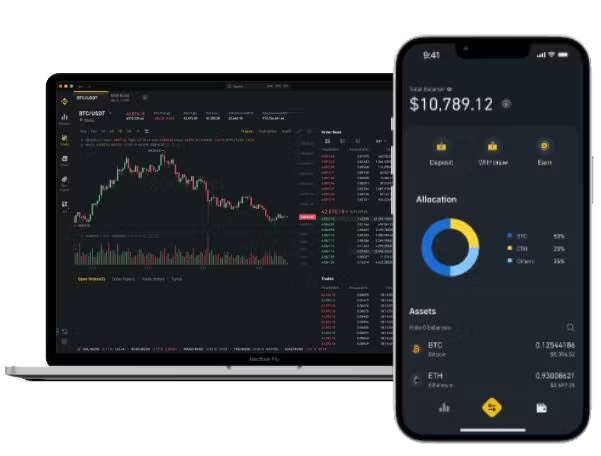
Over time, Binance expanded far beyond spot trading. It now offers one of the most comprehensive ecosystems in crypto, covering derivatives, lending, staking, launchpad token sales, copy trading features, cross chain bridges, liquidity pools, and professional trading terminals.
While some of these features vary regionally, the global platform remains one of the most advanced exchanges available to Australians.
What Binance Offers
Diverse Trading Products
Binance functions as a full-scale crypto ecosystem. The platform supports spot trading, margin trading with up to 20× leverage, futures contracts with leverage up to 125×, and options. Traders can choose from market, limit, stop‑limit and advanced order types such as One Cancels the Other (OCO) and trailing stops.
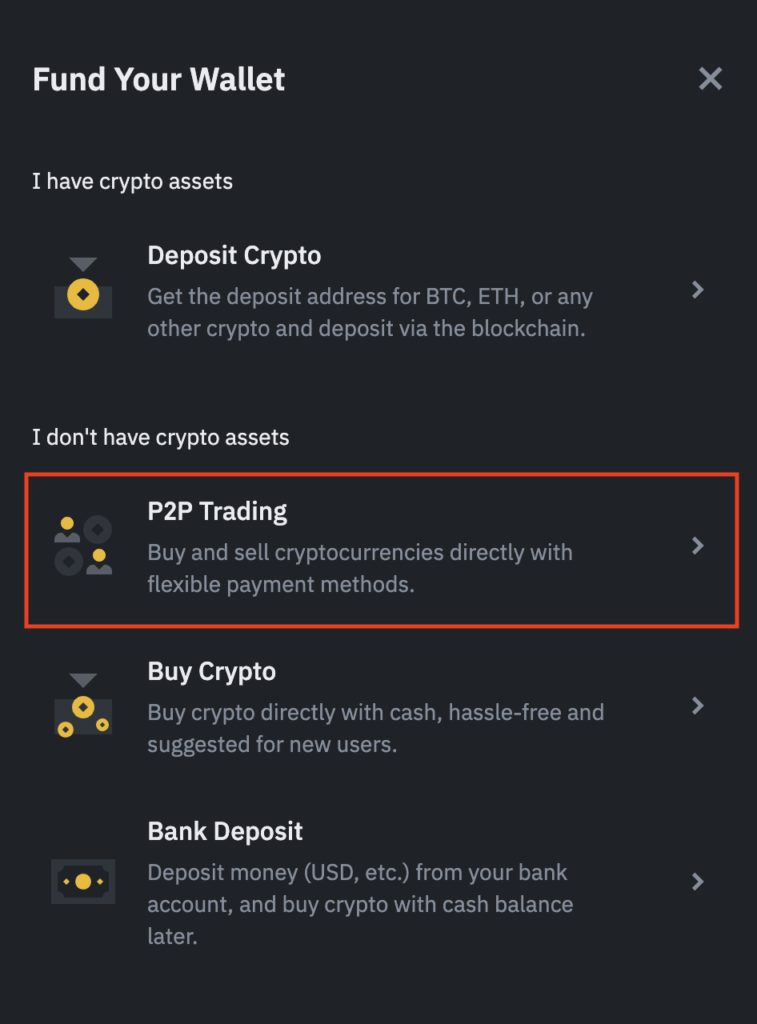
Beyond trading, Binance offers copy trading and trading bots, allowing users to mirror professional traders or automate strategies. P2P trading lets buyers and sellers exchange crypto directly without intermediaries. Leveraged tokens give exposure to leverage without managing margin positions. Launchpad and Launchpool provide early access to new tokens and yield opportunities.
Earn Products
The Binance Earn suite includes staking, savings and liquidity farming. Users can deposit crypto into flexible savings for daily interest or lock tokens into fixed-term products for higher yields. Note that Binance charges a 10% commission on staking rewards, higher than some competitors.
NFT & Web3 Ecosystem
Binance hosts one of the most active NFT marketplaces. It charges a 1% fee on NFT sales, with creators setting their own royalty percentages. Unique offerings such as Mystery Boxes and exclusive drops attract collectors.
For users exploring decentralised applications, the Binance Web3 Wallet integrates self‑custody directly within the Binance app. It uses a key‑sharding and secure recovery mechanism and allows seamless transfers between the exchange and the wallet. This self‑custody approach ensures you hold the private keys while still enjoying Binance’s interface.
Fee Structure
Spot and Futures Trading Fees
Binance uses a maker‑taker fee model. Standard spot trading fees start at 0.10% for both makers and takers, and you can reduce them to 0.075% by paying with BNB. Futures fees are even lower, starting at 0.02% for makers and 0.04% for takers. VIP tiers further reduce fees for high‑volume traders.
Deposit & Withdrawal Fees
Crypto deposits are generally free, while withdrawal fees vary by blockchain network. Fiat deposits via bank transfer are often free, but credit/debit card deposits incur fees around 1.8–2%. Fiat withdrawal fees depend on the method—bank transfers might cost around $15 per withdrawal.
Other Fees
Binance charges a 10% fee on staking rewards. NFT sales incur a 1% marketplace fee. P2P trades are generally fee‑free, and crypto deposits incur no charges.
Supported Assets & Payment Methods
Binance lists more than 500 cryptocurrencies ranging from blue‑chip assets like Bitcoin (BTC) and Ethereum (ETH) to smaller altcoins and stablecoins. It also supports over 1,300 spot trading pairs, providing deep liquidity across a wide range of markets. Besides crypto pairs, Binance offers fiat pairs in USD, EUR, GBP, AUD, BRL, INR, TRY, ZAR and other local currencies.
Deposit Methods
Binance supports multiple payment channels:
- Bank transfers: ACH, SEPA, SWIFT and local rails depending on country.
- Credit and debit cards: Visa, Mastercard, Apple Pay and Google Pay.
- P2P marketplace: Peer‑to‑peer trades for fiat on‑ramping.
- Cryptocurrency deposits: Free deposits of supported coins.
Withdrawal methods mirror deposit methods; bank transfer fees vary by region.
Security & Regulation
Security Measures
Binance has implemented a robust set of security tools:
- SAFU Fund: The Secure Asset Fund for Users (SAFU) is an insurance pool funded by trading fees, valued at about $1 billion. It compensates users in the event of a breach.
- Two‑Factor Authentication (2FA): Mandatory 2FA adds an extra layer of login security.
- Address Whitelisting & Device Management: Withdrawal address whitelisting ensures funds can only go to authorised wallets, while device management monitors login sessions.
- Anti‑Phishing Code & Passkeys: Custom codes appear in official emails to prevent phishing.
- Cold Storage: The majority of customer funds are stored offline in cold wallets, reducing exposure to hacks.
- Proof‑of‑Reserves: Binance publishes cryptographically auditable proof‑of‑reserves reports using zk‑SNARKs to show that customer balances are fully backed.
- Risk Detection: The Risk Sniper system monitors transactions for high‑risk addresses and activities.
These measures have mitigated damage from past breaches. Binance lost 7,000 BTC in a 2019 hot‑wallet hack and 2 million BNB in a 2022 bridge exploit, but customers were reimbursed and the platform strengthened its security protocols.
Regulatory Compliance & Challenges
Binance holds licences in multiple jurisdictions. It is registered as a Digital Asset Service Provider (DASP) and Virtual Asset Service Provider (VASP) in Europe and holds a Financial Services Permission (FSP) and Category 4 Crypto‑Asset Service Provider (CASP) licence in the Middle East. In 2025 it obtained three licences in the Abu Dhabi Global Market (ADGM) for exchange, clearing house and broker‑dealer services.
However, Binance has faced significant regulatory scrutiny. In 2023 the exchange reached a $4.3 billion settlement with the U.S. Treasury’s FinCEN and other agencies after admitting violations of anti‑money‑laundering laws. As part of the agreement, FinCEN will monitor Binance operations for five years and the platform must enhance compliance controls. Founder Changpeng Zhao pleaded guilty to U.S. charges and received a four‑month prison sentence; he stepped down as CEO and was replaced by Richard Teng. Binance has since secured licences across 21 jurisdictions under new leadership.
Availability & Legal Restrictions
Binance.com is not accessible to U.S. residents. American users must sign up for Binance.US, which offers spot trading on about 200 coins but lacks futures and margin products. Several countries; including some European and African jurisdictions have imposed restrictions or bans on Binance, and stablecoin trading pairs that are not compliant with the EU’s MiCA regulation have been delisted. Always check local regulations before opening an account.
Pros & Cons
Pro’s
✅ Extensive asset selection: Over 500 coins and 1,300 pairs ensure deep liquidity for virtually any trading strategy.
✅ Competitive fees: Spot fees start at 0.10% with discounts for BNB holders, and futures fees are even lower.
✅ Comprehensive ecosystem: From spot and derivatives to copy trading, staking, Launchpad and NFTs, Binance offers a “one‑stop shop” for all things crypto.
✅ High liquidity & fast execution: Binance handles tens of billions of dollars in daily volume and can process over 1.4 million orders per second.
✅ Robust security: SAFU fund, cold storage, 2FA, proof‑of‑reserves and risk detection help protect user funds.
✅ Global coverage & mobile app: Supports multiple fiat currencies, offers an intuitive mobile app for iOS and Android, and provides educational resources.
Con’s
❌ Regulatory uncertainty: Ongoing investigations and settlements have led to fines and restrictions, including a 2023 U.S. settlement and CEO resignation. Availability may change depending on jurisdiction.
❌ Complex interface for beginners: The plethora of trading options and tools can be overwhelming for new users.
❌ Deposit fees & staking commissions: Credit/debit card deposits incur 1.8–2 % fees, and Binance takes a 10 % cut of staking rewards.
❌ Limited U.S. service: U.S. residents must use Binance.US, which offers fewer assets and no derivatives.
❌ Customer support issues: Although live chat is available, users report slow response times and no phone support.
How to Get Started on Binance
- Sign up: Visit Binance.com (or Binance.US if you’re in the United States) and click Register. Enter your email or phone number and create a strong password. Follow the verification email or SMS instructions.
- Complete KYC: Binance requires identity verification to comply with anti‑money‑laundering rules. Upload a government‑issued ID (passport or driver’s license) and complete a selfie liveness check. Approval usually takes minutes.
- Secure your account: Enable two‑factor authentication (Google Authenticator or SMS), set an anti‑phishing code and whitelist withdrawal addresses.
- Deposit funds: Choose a deposit method—bank transfer, card payment, or cryptocurrency. Remember that card deposits carry higher fees. Crypto deposits are free.
- Start trading: Navigate to the Trade section and pick Spot or Convert for simple purchases. Explore advanced options such as Margin, Futures or Options once you’re comfortable with the interface.
- Explore additional services: Try Earn products for passive income, purchase NFTs on the Binance NFT marketplace, or test the Web3 wallet for self‑custody.
- Stay compliant: Keep up with regional regulations and update your KYC information if required. Consider using a hardware wallet for long‑term storage.
Final Verdict
Binance stands out as a powerhouse in the crypto industry, offering an unparalleled combination of low fees, extensive asset listings, deep liquidity and innovative features. Whether you’re a casual investor or an advanced trader, Binance provides tools for nearly every strategy; from simple spot purchases to leveraged futures, staking, NFTs and early‑stage token launches.
However, regulatory scrutiny and a complex interface mean it’s not perfect for everyone. U.S. residents must use Binance.US, which lacks many global features, and deposit fees can be higher than other exchanges. Despite these drawbacks, Binance remains one of the most comprehensive and secure platforms available today. Make sure to understand the risks, enable all available security measures and stay informed about local regulations before trading.
Now that you have all the information about whether Binance is the right fit for you, it’s time to decide what’s next.








