What is Cryptocurrency?
If you’re new to this space, you’ve probably heard the word “Cryptocurrency” a thousand times. Or maybe you’ve been around for a year, soaking in the hype around this revolutionary digital currency, but still don’t fully understand what it actually is. In its simplest form, Cryptocurrency has redefined the digital finance landscape, evolving how we perceive value, ownership, and trust through the digital world; without the need for banks, governments, or middlemen.
At its core, cryptocurrency is a digital asset that uses cryptography to secure transactions and control the creation of new units. But what makes it truly revolutionary is its decentralised nature; the fact that no single entity owns or controls the network.
Traditional financial systems rely on trusted intermediaries to store & manage funds. When you send money through a bank, that bank verifies, records, and approves the transaction. In crypto, the same function is achieved by a network of computers (called nodes) working together under mathematical rules instead of human oversight.
Every transaction is verified and permanently recorded on a blockchain; a public, transparent ledger that is impossible to tamper with and can be audited by anybody at any time. This system creates a level of transparency and security the traditional financial world has never had.
We use three simple terms to represent the fundamental use-case of this next generation of digital finance:
Cryptocurrency = Money built on code, not institutions.
Blockchain = The database that records and protects it.
Decentralisation = No single point of control or failure.
Since Bitcoin’s creation in 2009, cryptocurrency has evolved from a niche experiment into a global financial ecosystem. Today, there are thousands of cryptocurrencies powering everything from online payments and smart contracts to digital art, decentralised finance (DeFi), and even gaming economies.
Crypto represents a shift in power; away from central authorities controlling the storage of funds into self-custodial asset ownership. It’s about building a financial system where people truly own their assets, free from manipulation, censorship, and border restrictions.
How Cryptocurrency Works
Every Cryptocurrency transaction is powered through a network of computers that agree on who owns what, without needing a central authority.
This system runs through a combination of cryptography, mathematics, and economic incentives. Here’s how it all ties together:
Blockchain: The Digital Ledger
Every cryptocurrency runs on a blockchain, which is a public, digital ledger that records every transaction ever made.
Think of it like an open notebook shared across thousands of computers.
When someone sends Bitcoin or another crypto asset:
- The transaction is broadcast to the network.
- Nodes (computers in the network) verify that the sender actually owns the funds.
- Verified transactions are grouped into “blocks.”
- Each new block is added to the previous one, forming a continuous chain of data (the “blockchain”).
Once recorded, the data in a block cannot be changed without altering every block after it, which makes tampering practically impossible. As the blockchain is an open-format ledger system, anybody can access a transaction history if they know the transaction hash (TX) that is associated with the event.
Decentralisation and Consensus
Because no single entity controls the blockchain, the network needs a way to agree on the truth. This is called Blockchain consensus.
Different cryptocurrencies use different consensus mechanisms:
- Proof of Work (PoW): Used by Bitcoin. Miners compete to solve complex mathematical problems. The first to solve it adds the next block and earns new coins as a reward.
- Proof of Stake (PoS): Used by Ethereum and many modern blockchains. Validators “stake” (lock up) their coins to help secure the network, earning rewards for verifying transactions.
Both systems rely on economic incentives. Honest participation is rewarded, dishonest behaviour costs you real money.
To cover all the bases, there is a third type of blockchain that Veers slightly away from a consensus based blockchain known as a Proof of Authority (PoA) blockchain. Used by private or permissioned blockchains. Instead of miners or stakers, a small number of trusted validators are chosen based on their reputation and identity. These validators confirm transactions and add new blocks, making the network faster and more efficient, but slightly more centralised. PoA blockchains are far less common as they don’t fit the decentralised model that most projects & investors are after.
Mining and Network Security
In Proof of Work systems, mining is the process of validating transactions and creating new coins. Miners use powerful computers to perform calculations that secure the network. You may have heard the reference ‘Bitcoin Mining’ before… Well this is exactly that. The cost of this process; electricity, hardware, and time, is what protects Bitcoin from attacks.
In Proof of Stake systems, instead of competing with computing power, validators are chosen based on how much crypto they’ve staked. If they try to cheat, their staked coins can be destroyed; aligning financial interest with honesty.
Wallets and Keys
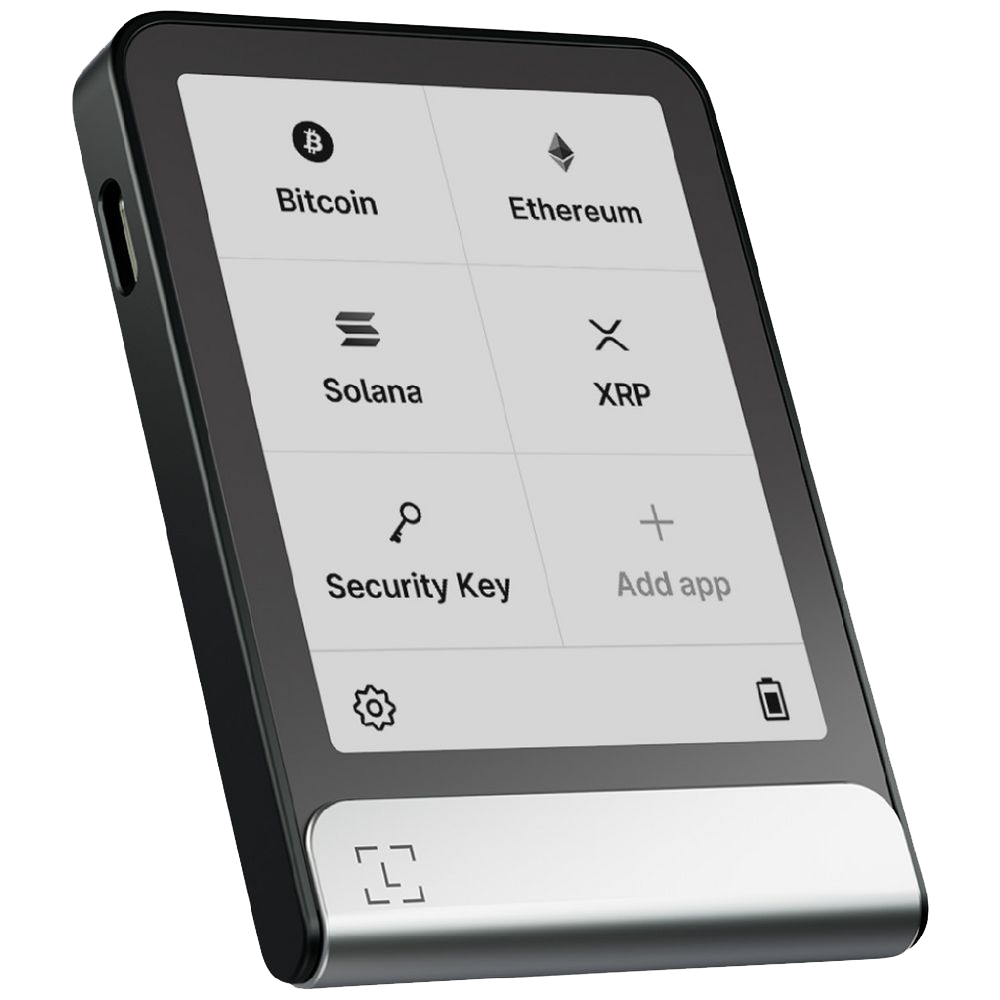
To interact with cryptocurrency, you use one of three types of crypto wallet; Hot, Warm, or Cold that stores your private keys.
- Public Key: Your public address where anyone can send crypto to it.
- Private Key: Your private login where whoever has it can control the funds within it.
It’s important to know that your wallet doesn’t actually “store” crypto. Instead it stores the keys that let you access your crypto on the blockchain. Lose your private key, and the assets are gone forever.
We have a full chain of resources directed towards crypto wallets that you can access here:
A crypto wallet is the interface through which you access your cryptocurrency. It does not actually store coins the way a physical wallet stores cash. Instead, it stores your private key, which is the cryptographic proof of ownership that allows you to authorise transactions on the blockchain. Your public key, which derives from your private key, generates the wallet address you share with others to receive funds. Keeping your private key secure and private is the fundamental security requirement in cryptocurrency. Anyone who has your private key has full, irreversible access to the funds in that wallet.
Supply, Scarcity, and Tokenomics
Each cryptocurrency follows its own monetary policy; rules about how new coins are created and how many can exist.
- Bitcoin: Fixed supply of 21 million coins.
- Ethereum: Variable supply, but controlled through network updates and burns.
- Stablecoins: Pegged to real-world assets like the US dollar.
This code-level transparency allows anyone to verify the rules, unlike traditional currencies, which can be printed at will by central banks. At the creation of a crypto token/coin, supply quantities are generated based on the rules associated with the project at launch. This means that if the creator of a project decides to create an unlimited supply of tokens, they technically can do this. Likewise, if the creator decides to only have a fixed supply for the life of the project, just like Bitcoin has a fixed supply of 21 million, this can never be altered ever again.
Putting It All Together
When you buy, send, or trade cryptocurrency, you’re interacting with a transparent, self-governing financial network that relies on mathematics and code. Every rule, every transaction, every coin in existence is verifiable by anyone, anywhere, at any time. That’s what makes crypto unique; it replaces trust in institutions with proof in technology.
The Technology Behind Cryptocurrency (Blockchain Explained Simply)
At the core of every cryptocurrency is something called blockchain technology. It’s what makes digital money secure, transparent, and (in most cases) decentralised.
Think of a blockchain as a digital ledger; a record book that keeps track of every transaction ever made. But unlike a traditional ledger kept by a bank or government, a blockchain is shared across thousands of computers all around the world.
Here’s the simple breakdown:
- Blocks: Every time a transaction happens, it’s grouped into a “block.”
- Chain: Once a block is full of transactions, it’s linked to the previous block, creating a permanent “chain.”
- Transparency: Every participant in the network can see the history of transactions.
- Security: Once data is added to a block, it can’t be changed or deleted. To alter one transaction, you’d need to rewrite the entire chain across thousands of computers simultaneously.. practically impossible.
This structure creates a system that’s trustless but reliable; you don’t need to trust a middleman because the technology itself guarantees the accuracy and integrity of the data. Without it, Bitcoin wouldn’t exist.
Why Crypto Exists
Cryptocurrency was created to fix problems within the world’s global financial system:
The 2008 global financial crisis exposed how fragile centralised financial systems can be and how ordinary people bear the consequences of institutional failures they had no part in creating. Bitcoin was published in that environment as a direct response: a monetary system where no single institution could create money arbitrarily, freeze accounts, or fail in a way that required public rescue. The core promise of cryptocurrency is a financial system governed by transparent, immutable rules rather than the decisions of governments and banks, accessible to anyone with an internet connection regardless of their nationality, credit history, or economic status.
Trust
For most of modern history, we’ve relied on central authorities to manage our money; governments, banks, and payment processors. We trust that they’ll handle it fairly, store it safely, and not manipulate the system for their own gain. But historically that trust has been broken, time and time again: Bank collapses, hidden inflation, currency controls.. all proof that trust-based systems eventually fail.
Crypto flips this model on its head. Instead of trusting institutions, you trust code; open-source, verifiable, and transparent. The blockchain doesn’t lie, doesn’t sleep, and doesn’t play favourites.
Inflation
Every fiat currency in history has either collapsed or lost significant value over time. Governments can print money whenever they want, diluting the value of what’s already in circulation. Its slow erosion of value whilst invisible to most, has become devastating for the long-term wealth of families.
Bitcoin was created as an antidote to inflation. A currency with a hard cap of 21 million coins. No more can ever be created. This scarcity mimics digital gold, making it one of the few assets that actually gets stronger the more people use and trust it.
Middleman
Traditional finance is filled with middlemen; banks, payment processors, brokers that all claim fees for their services, adding delays, and holding power over access to your money. Crypto removes the need for them entirely.
You can send value anywhere in the world, anytime, directly from one person to another, with no permission required. No bank hours. No frozen accounts. No third parties taking a cut. Just peer-to-peer value transfer on a global scale.
Censorship
In many parts of the world, financial freedom is still a privilege, not a right.
Governments can block transactions, freeze accounts, or shut down businesses that don’t align with their agenda. The unfortunate reality is that we’re seeing this happen far more often than people realise, with 2024 alone seeing roughly 4 million accounts frozen worldwide.
Cryptocurrency gives individuals the ability to store and move wealth without censorship.
Your funds can’t be confiscated, and your transactions can’t be stopped. As long as you control your private keys, your funds are solely in your own possession.
Transparency
The global financial system is built behind closed doors. You don’t know what happens to your deposits once they’re in the bank. You don’t see the real flow of money between institutions. Blockchains change that.
Every transaction is recorded on a public ledger that anyone can verify. No hidden fees, no shadow records, no insider access. It’s finance that’s open, traceable, immutable, and accountable to everyone.
Different Types of Cryptocurrencies
Not all cryptocurrencies are created equal. While Bitcoin started it all, the ecosystem has exploded into thousands of digital assets, each serving different purposes and built for different reasons.
Let’s break down the main categories of cryptocurrency projects you’ve probably already come across, and what makes each one matter:
Store-of-Value Coins (Bitcoin)
Bitcoin is often called “digital gold”
It was designed to do one thing better than anything else: store value securely over time without relying on banks or governments. It has a fixed supply of 21 million coins, making it deflationary by design. No inflation. No increased supply.
You can learn more about Bitcoin here.
Smart Contract Platforms (Ethereum and beyond)
While Bitcoin focused on digital money, Ethereum introduced programmable money.
It added something game-changing: smart contracts; code that runs automatically when conditions are met.
This innovation transformed crypto from simple payments into a global computing network where developers can build decentralised apps (dApps), finance tools, games, and much more. These blockchains form the foundation of Web3, the next generation of the internet where users actually own their data and assets.
Examples: Ethereum (ETH), Solana (SOL), Avalanche (AVAX), Cardano (ADA)
You can learn more about Ethereum here.
Stablecoins
Crypto volatility is real, prices move fast. Stablecoins exist to fix that.
Stablecoins are digital currencies pegged to stable assets like the US Dollar, with 1 Stablecoin always having a pegged value of $1. This form of stable digital currency allows users move funds quickly across blockchains without needing to cash out into fiat currency. Stablecoins, just like their name suggests, provide a stable, digital financial option for peer-to-peer transactions that aren’t subject to value volatility.
For instance, if you were purchasing a car with bitcoin, agreeing to pay exactly 0.5 Bitcoin valued at $60,000USD in three days time, might actually be worth $65,000USD at the time of purchase. As a result, you’d be paying $5,000USD more than the cost of the vehicle. Stablecoins solve this issue, allowing a true 1:1 value with traditional USD to be paid with digital currency.
Examples: USDT (Tether), USDC (USD Coin), AUDD (AUD Coin)
You can learn more about Stablecoins here.
The Broader Impact – Crypto as a Financial Revolution
Cryptocurrency shifts the paradigm of how we think about monetary finance, ownership, and trust. It’s created a fundamental movement toward a more open, transparent, and equitable financial system.
Digital finance gives individuals the tools to take control of their wealth, removes reliance on centralised institutions, and opens doors to financial innovation that was impossible before. From Bitcoin’s digital gold to Ethereum’s programmable networks, to DeFi, NFTs, and beyond, crypto represents both technology and philosophy: freedom, transparency, and self-sovereignty.
But with great power comes responsibility. Understanding how crypto works, keeping your assets safe, and making informed decisions are essential. Cryptocurrency has created a lasting evolution in how value moves and is managed worldwide.
At its core, cryptocurrency is about empowering people. It’s a tool for financial independence, innovation, and global participation. Whether you’re holding a single Bitcoin, exploring DeFi, or just learning the ropes, you’re part of a revolution that is redefining the way we think about money and ownership.
The world is changing. Just like in the early 2000’s when the internet bubble ‘popped’, Cryptocurrency is day by day moving towards the same level of global adoption.
Frequently Asked Questions
What is cryptocurrency?
Cryptocurrency is a form of digital or virtual money that uses cryptography to secure transactions and control the creation of new units. Unlike traditional currencies issued by governments, most cryptocurrencies operate on decentralised networks, typically blockchains, which means no single authority controls them. Bitcoin was the first cryptocurrency, created in 2009, and since then thousands of others have been created, each with different features, purposes, and underlying technology.
How is cryptocurrency different from regular money?
Regular money, called fiat currency, is issued by governments, controlled by central banks, and has no hard supply limit. Cryptocurrency is typically issued by a protocol or algorithm with predetermined rules, often has a fixed or capped supply, and operates without central control. Crypto transactions can be sent globally without banks, are recorded on a transparent public ledger, and in most cases cannot be reversed once confirmed. Regular money is widely accepted for all purchases, while crypto acceptance is still growing.
What are the most popular cryptocurrencies?
Bitcoin is the largest and most well-known cryptocurrency by market capitalisation. Ethereum is the second largest and is known for its smart contract functionality. Other widely used cryptocurrencies include Solana, known for fast and low-cost transactions, BNB, the native token of the Binance ecosystem, XRP, used for cross-border payments, and stablecoins such as USDT and USDC, which are pegged to the US dollar. There are thousands of cryptocurrencies, but a small number account for the majority of total market value.
Can cryptocurrency be used to buy things in Australia?
Yes, cryptocurrency can be used to make purchases in Australia, though acceptance is not yet universal. Some Australian retailers, service providers, and online businesses accept crypto payments directly. Crypto-linked debit cards allow holders to spend cryptocurrency at any merchant that accepts Visa or Mastercard by converting crypto to Australian dollars at the point of sale. The Australian Tax Office requires that crypto used for purchases is treated as a disposal and may trigger a capital gains tax event.
Is cryptocurrency a good investment?
Cryptocurrency carries significant risk and is considered a high-volatility asset class. It has produced extraordinary returns during bull markets and severe losses during downturns. Whether it is a good investment depends entirely on your financial situation, risk tolerance, time horizon, and whether you have taken the time to understand what you are investing in. Many financial advisors recommend treating crypto as a small portion of a diversified portfolio rather than a primary investment vehicle. You should never invest more than you can afford to lose.
What is a crypto market cap?
Market capitalisation in crypto refers to the total value of all coins or tokens currently in circulation for a given cryptocurrency. It is calculated by multiplying the current price of one coin by the total number of coins in circulation. Market cap is commonly used to rank cryptocurrencies by size and compare their relative scale. A higher market cap generally indicates a more established and liquid asset, while low-cap cryptocurrencies tend to carry higher volatility and risk.
Is cryptocurrency taxed in Australia?
Yes, cryptocurrency is taxed in Australia. The Australian Taxation Office treats cryptocurrency as property, not currency. This means that selling, trading, gifting, or using crypto to purchase goods or services may trigger a capital gains tax event. If you hold a crypto asset for more than 12 months before disposing of it, you may be eligible for a 50 percent capital gains tax discount. You are required to keep records of all transactions including the date, amount in AUD, and the nature of each transaction.
What is blockchain technology?
Blockchain is the underlying technology that powers most cryptocurrencies. It is a distributed ledger that records transactions in chronological order across a network of computers. Each group of transactions is bundled into a block, and each block is cryptographically linked to the previous one, forming a chain. Because copies of the ledger are held by thousands of independent nodes around the world, it is extremely difficult to alter or falsify historical records. This makes blockchain a highly transparent and tamper-resistant system for recording data.
Choose your next topic from our Cryptopedia