
Frequently Asked Questions
What are the psychological stages of a market cycle?
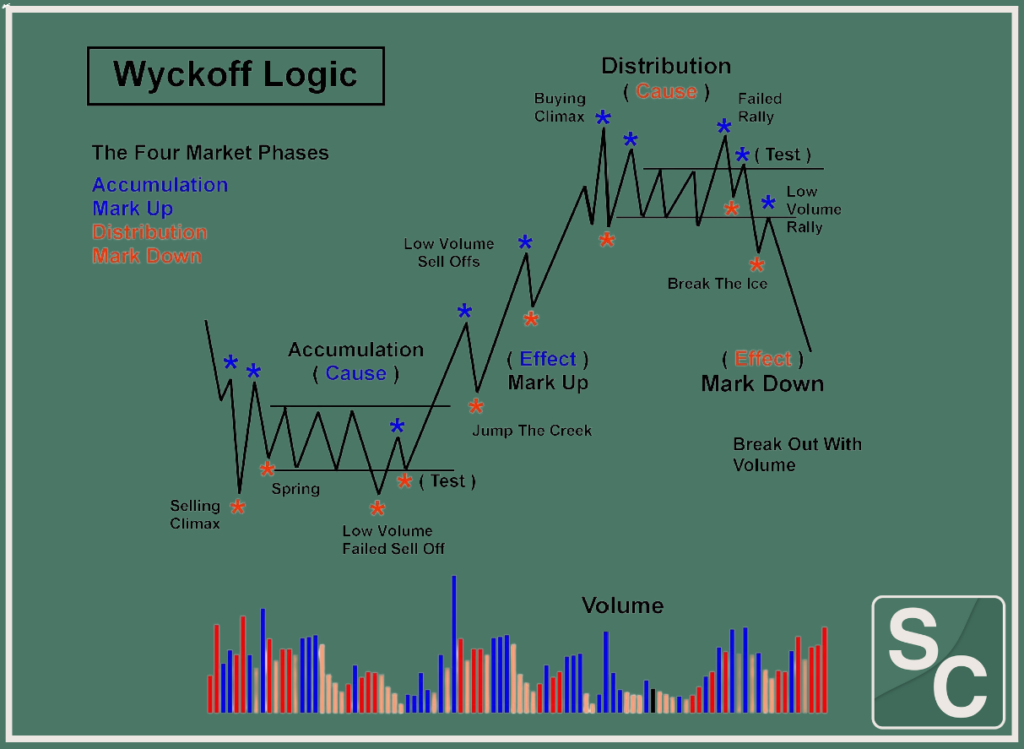
Market cycles follow predictable emotional stages: disbelief (early rise dismissed as a bear market rally), hope (optimism returns), optimism (momentum builds), belief (strong conviction, broad participation), thrill (euphoria, prices accelerating), euphoria (peak, maximum financial risk, media saturation), anxiety (first signs of reversal), denial (dip buyers confident), panic (sharp sell-off), capitulation (forced selling), anger (blame and disillusionment), depression (bear market lows), and disbelief again as the next cycle begins.
Why do investors consistently buy near the top and sell near the bottom?
Humans are naturally trend-following creatures. Rising prices create social proof, media attention, and FOMO that pull the majority of investors in near the peak. Falling prices create fear, loss aversion, and capitulation that push investors out near the bottom. The emotional intensity is highest at exactly the wrong moments. This pattern is reinforced by recency bias (assuming current trends will continue) and loss aversion (the pain of losses outweighs the pleasure of gains, causing premature selling during corrections).
How can understanding market cycles improve your investment decisions?
Recognising where you are in a cycle helps calibrate risk. In euphoria phases, reduce exposure and take profits even though sentiment is maximally bullish. In capitulation phases, consider accumulating even though sentiment is maximally bearish. You do not need to call the exact top or bottom. Simply being less greedy than the crowd at the top and less fearful than the crowd at the bottom produces better outcomes than following the emotional majority. Dollar-cost averaging is one of the most reliable ways to avoid cycle timing mistakes.
What is the role of narrative in market cycles?
Narratives are the stories that justify prices. Bull markets generate compelling narratives (mass adoption, institutional arrival, digital gold) that attract believers and capital. Bear markets generate counter-narratives (regulation crackdown, technology failure, Ponzi schemes) that drive capital out. Savvy investors track narrative shifts as leading indicators of sentiment changes. When everyone is using the same confident language to explain why prices will go higher, that is often a late-cycle signal.
How does herd mentality drive crypto market cycles?
Herd mentality means following the crowd because others appear to have information you lack. In crypto, this is amplified by social media, influencer culture, and high price volatility. When Bitcoin rises sharply, millions of people see others making money and fear they are missing something. They buy in, pushing prices higher, which attracts more buyers. This self-reinforcing feedback loop creates bubbles. The herd disperses when prices fall, with the same feedback working in reverse.
What is the Crypto Fear and Greed Index?
The Crypto Fear and Greed Index is a sentiment indicator that aggregates signals including volatility, market momentum, social media activity, surveys, Bitcoin dominance, and Google Trends data into a single score from 0 (Extreme Fear) to 100 (Extreme Greed). It is widely used as a contrarian signal: extreme fear can indicate a buying opportunity, while extreme greed may signal elevated risk. It is not a precise timing tool but provides useful context for where market sentiment sits in the emotional cycle.
How long do crypto market cycles typically last?
Bitcoin's historical cycle has broadly aligned with its four-year halving schedule, with bull markets often peaking 12-18 months after each halving and bear markets lasting 2-3 years. However, this pattern is not guaranteed and is influenced by macro conditions, regulatory events, and market maturation. As institutional participation grows and the asset class matures, cycle dynamics may change. Treat historical cycle length as a rough reference, not a trading rule.
Can behavioural finance concepts help crypto investors?
Yes. Key behavioural finance concepts directly applicable to crypto include: recency bias (overweighting recent performance), anchoring (fixating on past highs when evaluating current price), availability heuristic (overestimating risks recently in the news), confirmation bias (seeking information that validates existing beliefs), and the disposition effect (selling winners too early and holding losers too long). Awareness of these biases does not eliminate them, but it creates a pause that allows for more deliberate decision-making.